
Remote Sales Teams Fix Facebook Connexion Problems Fast
· 22 min read
Why Facebook connexion problems matter for remote sales and appointment setters
Imagine you’re about to reach out to a hot new lead, but suddenly, you can’t log into Facebook. Your "facebook connexion" is broken.

For remote sales teams and appointment setters in 2026, this isn’t just a small hiccup. It’s a big problem that can stop your work dead in its tracks.
Think about it: Many of your daily tasks depend on being logged into your Facebook account. You might use it for finding new leads, checking in with past contacts, or even updating your customer relationship management (CRM) system with new information. If you can’t get past the "facebook.com login" screen, or if your "facebook lite login" isn’t working, you’re stuck.
This isn’t just about missing one message. A constant struggle with your "facebook log into my account" means lost time, missed opportunities, and delays in following up with important clients. You might not even be able to get to the "face book.com/login/identify" page to recover your account if things go really wrong. Did you know that after just three wrong tries, your account can get locked for security reasons? This makes fixing the issue even more urgent [^1].
In the fast-paced world of remote sales, every minute counts. Not being able to connect can slow down your entire workflow. That’s why understanding how to fix these issues quickly is so important. This guide is here to help you. We will walk you through common "facebook connexion" problems and give you simple steps to get back online. We’ll offer clear, proven ways to solve these login troubles, so you can focus on what you do best: setting those appointments and closing sales.
[^1]: FACEBOOK – LOG IN OR SIGN UP – redeot.mte.gov.br
When your "facebook connexion" isn’t working, it can feel like a big mystery. But actually, most login problems fit into a few main types. Understanding these types can help you figure out what’s wrong much faster.
Here are the common kinds of Facebook login errors:
1. User Name or Password Problems
This is the most common reason you can’t get past the "facebook.com login" screen.
- Wrong Password: You might have typed your password incorrectly. It happens to everyone!
- Wrong Account Name: Maybe you used an old email address or phone number that isn’t linked to your Facebook account anymore.
- Account Locked: If you try to log into my account too many times with the wrong details, Facebook might lock your account to keep it safe [^1]. This is a security step. If this happens, you might need to go to a page like "face book.com/login/identify" to prove you are you.
How to Spot It: The error message usually says something clear, like "Incorrect Password" or "The email/phone you entered doesn’t match any account."
2. Facebook Platform or Security Issues
Sometimes, the problem isn’t with what you typed.
- Facebook’s Side: Very rarely, Facebook itself might be having a small problem. This usually doesn’t last long.
- Security Checks: Facebook is always working to keep accounts safe. If you’re logging in from a new place, or a different device, Facebook might ask you extra questions to make sure it’s really you trying to do a "facebook log into my account".
How to Spot It: Messages might be less direct, like "Something went wrong" or "Please try again later," or it might ask you to verify your identity with a code.
3. App or Permissions Problems
If you’re using the Facebook app on your phone, tablet, or even "facebook lite login", the app itself can have issues.
- Old App Version: Your app might be old and needs an update.
- App Glitch: Sometimes apps just act a little funny and need to be closed and opened again.
- Permissions: The app might not have permission to use your internet or storage on your device.
How to Spot It: You might just see a general "Login Failed" message, or the app might crash when you try to log in.
4. Your Device or Internet Problems
Your own computer, phone, or internet can get in the way of a smooth "facebook connexion".
- Bad Internet: If your internet is slow or not working, Facebook can’t connect.
- Old Browser: If you are using an old web browser on your computer, it might not work well with Facebook anymore.
- Too Much Saved Data: Your browser or app saves small bits of information called "cache" and "cookies." If there’s too much old data, it can cause problems with your "facebook.com login" [^9], [^11]. It’s like having too many old papers on your desk. For mobile apps, clearing the in-app browser cache can help too [^10].
How to Spot It: Websites might load slowly, or you might see messages like "No Internet Connection" or "Page not found," even before you get to the Facebook login screen.
By understanding these common types of issues, you’re better prepared to fix your "facebook connexion" and get back to work.
When your "facebook connexion" hits a snag, it can feel frustrating. But don’t worry, many problems that stop your "facebook.com login" are quick fixes you can do yourself. These often involve your own device or web browser. Let’s look at some fast checks you can try in just a few minutes in 2026.

Clear Out Old Saved Data
Imagine your web browser or Facebook app as a desk. Over time, it collects lots of notes and scraps of paper (called "cache" and "cookies"). If these get too old or messy, they can stop your "facebook log into my account" from working properly [^3].
- For your web browser (like Chrome, Edge, Safari): You’ll want to clear both your browser’s cache and cookies. This basically cleans up all those old notes. How you do it is a little different for each browser, but you can usually find it in the "Settings" or "History" menu.
- For your Facebook app (including Facebook Lite login): The app also saves its own little notes. Clearing the app cache can often fix issues. For example, if you’re on a mobile device, you might need to clear the in-app browser cache [^2]. You can usually do this in your phone’s app settings or sometimes directly within the Facebook app itself [^1].
Check Your Apps and Browser
Sometimes the problem isn’t old data, but outdated software.
- Update Your Facebook App: Make sure your Facebook app or "facebook lite login" app is the newest version. Old versions can have bugs that stop you from logging in. Go to your phone’s app store (Google Play Store or Apple App Store) and check for updates.
- Reinstall the App: If updating doesn’t work, try taking the app off your device completely and then putting it back on. This is like giving it a fresh start.
- Browser Extensions: Do you have any extra tools or "extensions" in your web browser? Sometimes these can get in the way of Facebook. Try turning them off one by one, then try to log in. If it works, you found the problem!
Look at Your Device’s Time and Date
This might sound strange, but your phone or computer’s date and time need to be correct. Websites like Facebook use this to make sure your connection is safe. If your device’s time is wrong, it can cause security warnings and block your "facebook connexion" [^5]. Make sure your device is set to update its time automatically.
What About VPNs?
Some people use a VPN (Virtual Private Network) to protect their privacy or access content that might be blocked where they are [^7]. However, sometimes using a VPN can actually interfere with your "facebook.com login," especially if Facebook sees the VPN as an unusual or blocked connection [^6]. If you have a VPN on, try turning it off temporarily to see if that fixes your login issue.
How to Check if It’s Just You
The fastest way to tell if the problem is with your device or browser is to try logging in somewhere else:
- Try on a different device (like a friend’s phone or a different computer).
- Try using a different internet connection (like switching from Wi-Fi to mobile data, or vice-versa).
- Try using a different web browser.
If you can log in fine on another device or internet connection, then you know the problem is with your original device, browser, or network. If you still can’t log in anywhere, then it’s more likely a problem with your account or with Facebook itself. In that case, you might need to visit a page like facebook.com/login/identify to try to get back in.
When you make a "facebook.com login," it’s more than just typing your name and password. Facebook uses a smart system to keep your account safe and let other apps work with your information, but only if you say it’s okay. This system is often called an OAuth-style flow, and it uses special digital keys.
Your Digital Keys and Permissions
Think of it this way: when you log into Facebook, it gives you a secret digital key, called an "access token" [^20].
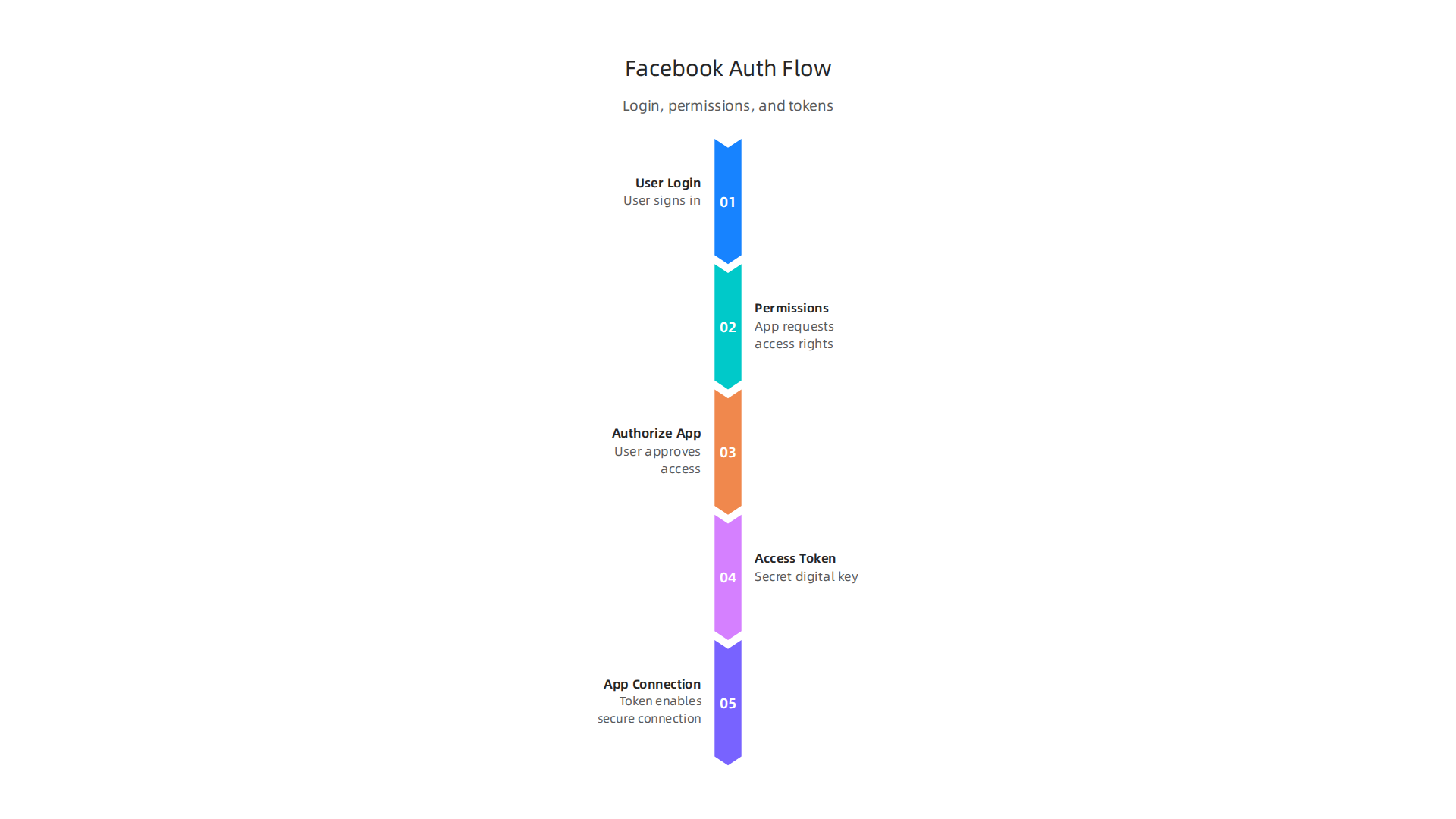
This token is like a special pass that says, "Yes, this is me, and I’m allowed to do certain things." When you use another app that connects to Facebook, Facebook gives that app a copy of a temporary key.

This key lets the app talk to Facebook on your behalf without it needing your password every single time.
These keys don’t last forever. They have an "expiration date," meaning they stop working after a set time. Sometimes, if a key isn’t refreshed properly, your "facebook connexion" to another app can break [^17]. Facebook also wants you to clearly agree to what information an app can use. These are called "permissions" or "scopes." Before an app can see your photos or friends list, you’ll see a screen asking for your permission. You get to say "yes" or "no."
Why Connections Break
So, what happens if this system gets tangled? Here are a few common reasons why a "facebook log into my account" connection might fail, especially for other apps or services you’ve linked:
- Expired Keys: The most common issue is that the digital key (token) for an app has simply expired. The app needs to ask for a new one, but sometimes that process doesn’t go smoothly [^13].
- Changed Permissions: Maybe you once let an app see your profile, but later you went into your Facebook settings and turned off that permission. The app can no longer do what it used to, and its "facebook connexion" will stop working.
- Security Changes: Facebook often updates its security rules. This can sometimes mean older ways apps connected no longer work, causing errors [^21]. For example, if you try to connect a CRM (Customer Relationship Management) tool to your Facebook, and Facebook changes how it handles these digital keys, your CRM might stop getting updates from Facebook. This means you might not see new messages or posts from customers on Facebook show up in your CRM.
It’s a good idea to periodically check the apps you’ve linked to your "facebook.com login" within your Facebook settings. If an app isn’t working right, checking its permissions and seeing if its digital key needs refreshing can often solve the problem.
Sometimes, when your "facebook connexion" acts up, it’s not about expired keys for other apps. Actually, it’s Facebook itself trying to keep your account extra safe. These security steps can sometimes feel like a problem when you’re trying to do a simple "facebook.com login."
Account Security, Two-Factor Authentication, and Recovery Paths
One big helper for keeping your account safe is called Two-Factor Authentication, or 2FA. This means you don’t just use your password to log in. You also need a second thing, like a special code sent to your phone or from an app on your device (Source: YouTube on 2FA). It’s an extra lock on your digital door.
This extra step is good, but it can cause problems if you lose your phone or can’t get the code. In 2026, many people use 2FA. If you’re stuck, Facebook often gives you backup codes you can use. It’s smart to write these down and keep them safe so you can still complete your "facebook log into my account" even without your phone (Source: YouTube on 2FA problems).
Sometimes, Facebook might think someone else is trying to get into your account. This happens if you log in from a new place or a different type of device than usual.

Facebook might then send you a warning about a suspicious login (Source: Trellix blog on phishing scams). If it’s really you, you can tell Facebook it’s okay. But if it’s not you, Facebook might put your account on hold to protect it. This can stop scammers from taking over your account, which is a big problem in 2026 (Source: NordVPN blog on Facebook scams).
If your account gets locked or you can’t remember your password for your "facebook.com login," there are ways to get back in. Facebook has a special page for finding your account, often found at "face book.com/login/identify." On this page, Facebook will ask you some questions to prove you are really you. They might ask for your email or phone number. Sometimes, they might even ask you to show a picture of your ID or have trusted friends help confirm your identity (Source: YouTube on advanced account protection). It’s important to have proof ready to make this process smoother. The same steps usually apply whether you’re using the main Facebook site or a "facebook lite login."
Network, DNS, VPN, and Firewall Problems That Block Facebook Access
Sometimes, your "facebook connexion" troubles aren’t about your account itself, but about the internet path you’re using. Think of it like a road to Facebook.

Sometimes, that road might be closed or have a detour. This is common if you’re trying to do a "facebook.com login" from certain places.
For example, many schools, workplaces, or even countries block Facebook. They do this by using special computer rules called firewalls or by changing how your computer finds websites (this is called DNS filtering). If you’re on a work network, you might find Facebook is simply not allowed.
How VPNs Can Help or Hurt
You might use a Virtual Private Network, or VPN, to keep your internet use private or to get around blocks. In 2026, many people use VPNs for different reasons. A VPN can help you access Facebook if it’s blocked in your area, by making it look like you’re browsing from somewhere else (source: Best VPNs for Facebook in 2026: Secure Access from Anywhere).
However, a VPN can sometimes cause problems for your "facebook log into my account." Facebook might see that you’re using a VPN and think something is strange. It might even block your login attempt if the VPN’s internet address is known for unusual activity (source: Facebook Logging In Problems: Every Fix for 2026). If you’re having trouble logging in with a VPN, you might try turning it off just to see if that fixes your "facebook connexion." If you rely on a VPN, some are better than others for Facebook (source: A VPN for Facebook: Access Facebook safely in 2026).
Fixing Network Issues
If you suspect your network is the problem, here are some easy things to try:
- Switch networks: The simplest fix is to try a different internet connection. For instance, turn off Wi-Fi on your phone and use your mobile data. If your "facebook lite login" works then, your main Wi-Fi network might be blocking Facebook.
- Check your DNS: DNS helps your computer find websites like facebook.com. If your DNS is acting up, you might not reach Facebook. You can try changing your DNS settings to a trusted public DNS provider to see if that helps (source: A VPN for Facebook: Access Facebook safely in 2026).
- Look at VPN settings: If you’re using a VPN and can’t log in, try disconnecting from it. If that works, your VPN might be the issue. Some VPNs let you pick different servers or ports, which can sometimes bypass blocks (source: How To Bypass VPN Blocks in 2026: 10 Easy Ways).
- Restart your router: Sometimes, a simple restart of your home Wi-Fi router can clear up minor network glitches.
By checking these network parts, you can often solve a stubborn "facebook connexion" problem and get back to your feed.
Third-party integrations: CRMs, apps, and reconnecting safely
Sometimes, your "facebook connexion" problems are not directly with Facebook itself, but with other apps that connect to it. Think of tools like Customer Relationship Management (CRM) systems or apps for getting new customers. These tools often link to your Facebook account to post for you, gather info, or run ads. But if that link breaks, it can mess with your "facebook log into my account" efforts when these apps try to do something, or just stop things from working as they should.
Why Your App Connections Might Fail
These third-party apps use special digital keys, called "access tokens," to talk to Facebook on your behalf.
An access token is like a temporary pass that lets an app do certain things with your Facebook account without you having to log in every time (source: Access Tokens for Meta Technologies). In 2026, these tokens are super important for keeping your apps connected. But these passes don’t last forever. Here’s why they might stop working:
- Expired Tokens: Just like a library card that needs renewing, these digital keys can expire. When an app tries to use an old key, Facebook says no. You might see errors like "invalid_grant" (source: Fixing OAuth 2.0 Errors: A Developer’s Guide to invalid_grant & More). This is a common reason for a lost "facebook connexion" for integrated tools. Sometimes, developers have to manually refresh these tokens if their system isn’t doing it automatically (source: Problems with Token Refresh for validity extension).
- Changed App Permissions: Maybe you changed a setting in Facebook that removed a permission the app needed. Or Facebook updated its own rules for apps, and the app needs new permission.
- Revoked Access: You or another person managing the Facebook account might have accidentally or on purpose cut off the app’s link to Facebook. This usually happens in Facebook’s "Settings & Privacy" area under "Apps and Websites."
How to Reconnect Safely
If one of your connected apps stops working with Facebook, you’ll need to reconnect it. This is usually safe and straightforward:
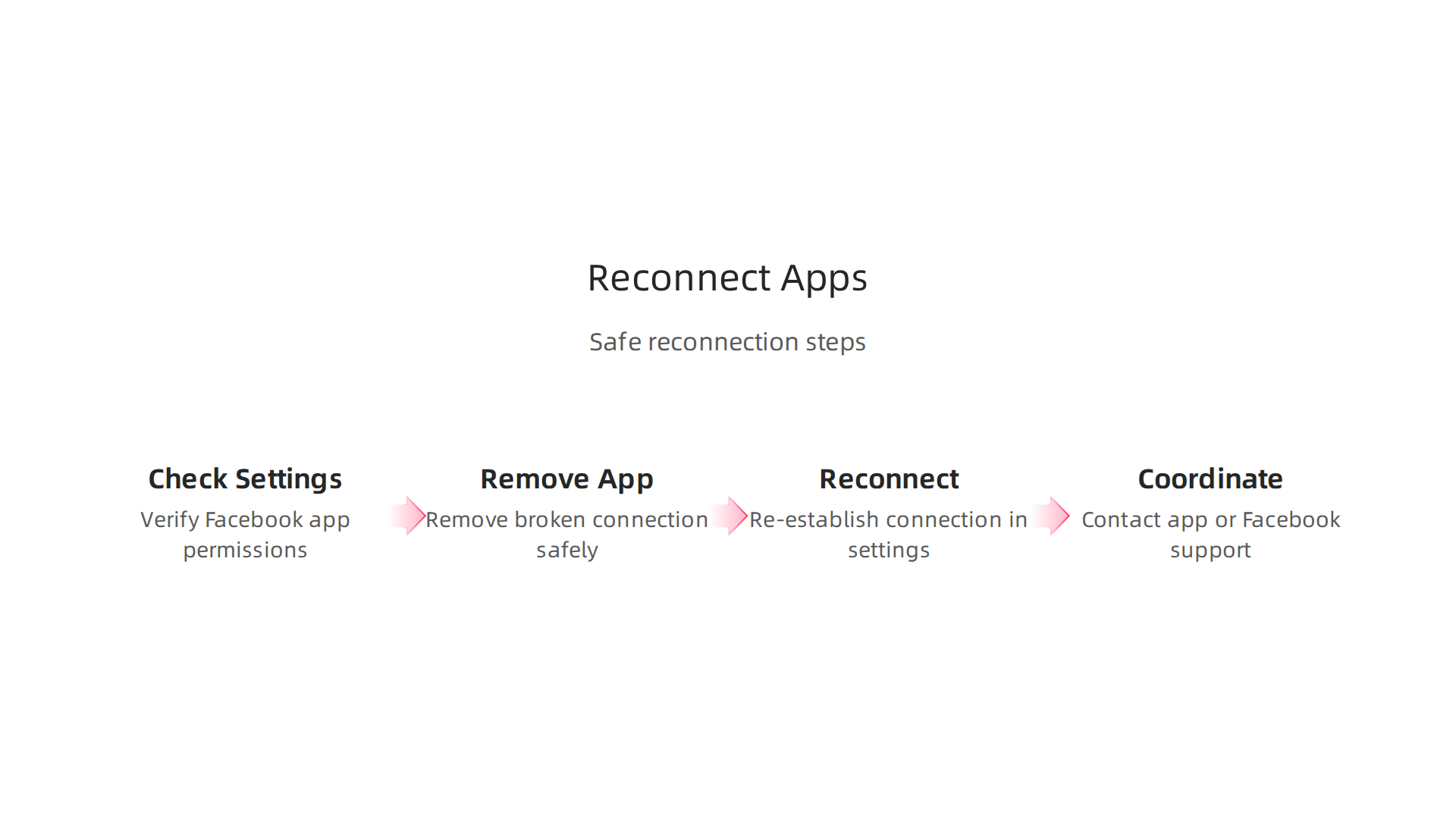
- Check Facebook Settings: Go to your Facebook profile, then "Settings & Privacy," then "Settings," and look for "Apps and Websites." Find the app that’s having trouble.
- Remove the App (If Needed): Sometimes, the best way to fix a broken link is to start fresh. Remove the app from Facebook’s list.
- Reconnect from the App’s Side: Go to the third-party app (your CRM or lead-gen tool). There should be an option to connect or reconnect to Facebook. Follow the steps. This will ask Facebook for a new "access token" and new permissions. When doing this, be careful what permissions you grant. Only allow what the app truly needs.
- Coordinate with Your Team: If your business uses these apps, make sure everyone who uses the "face book.com/login/identify" or "facebook.com login" for that account knows you are doing this. It prevents confusion and ensures nobody else tries to connect it at the same time, which can cause more issues.
When testing new integrations or fixing old ones, be sure to:
- Use a Test Account: If possible, test new app connections with a separate Facebook test account first. This way, if something goes wrong, it doesn’t affect your main "facebook connexion."
- Don’t Share Your Credentials: Never give your actual "facebook log into my account" password to a third-party app or person. Always use Facebook’s official connection process, which usually redirects you to Facebook to log in securely.
- Understand Permissions: Read carefully what permissions the app is asking for. If an app for scheduling posts wants access to your private messages, that’s a red flag. Only give what’s necessary.
Recognizing Scams, Avoiding Phishing, and When to Contact Support
Sometimes, what feels like a problem with your "facebook connexion" or "facebook log into my account" is not a technical glitch at all. It could be someone trying to trick you to get into your account. These tricks are called phishing or account takeover scams. In 2026, these online dangers are still common, so it’s good to know how to spot them and keep your account safe from harm.
Red Flags for Scams and Phishing
Phishing is when a bad actor tries to fool you into giving them your login details, like your password. They often pretend to be Facebook. Account takeover is when someone actually gets into your account without your permission. Here’s what to watch out for:
- Suspicious Emails or Messages: You might get an email or a message saying there’s a problem with your "facebook connexion," a suspicious login, or that your account will be locked. These messages often try to scare you into clicking a link right away. This is a common trick used in Facebook scams in 2026 to get you to click on bad links that steal your information, leading to account takeovers and identity theft, according to NordVPN (source: 20 Facebook scams you should be aware of).
- Fake Login Pages: If you click a link from one of these suspicious messages, it might take you to a page that looks like the "facebook.com login" page, but it’s not real. Always check the web address (URL) in your browser. A real Facebook login page will start with "https://www.facebook.com" or "https://m.facebook.com" for Facebook Lite. Fake pages might have slight spelling mistakes or extra words in the address. Watch out for these "Facebook login alert scams" which use fake pop-ups or emails (source: How to Detect & Avoid Facebook Login Alert Scams in 2026).
- Bad Grammar or Spelling: Real companies like Facebook usually have perfect writing. Scams often have strange words, bad grammar, or typos.
- Asking for Too Much Info: Facebook will never ask for your password in an email. If a message asks for your full login details, credit card numbers, or other private info directly, it’s a scam.
- Urgent Warnings: Scammers want you to act fast without thinking. They’ll use words like "Your account is in danger!" or "Immediate action required!" An "unauthorized login alert" from a scammer often looks very real, but it’s a trick to get your details (source: The Unfriending Truth: How to Spot a Facebook Phishing Scam…).
Keeping Your Account Safe
To protect your "facebook log into my account" efforts and your profile:
- Go Directly to Facebook: If you get a suspicious message, do not click the link. Instead, open your web browser and type "facebook.com" yourself to log in. This way, you know you are on the real website.
- Use Two-Factor Authentication (2FA): This adds an extra layer of security. Even if a scammer gets your password, they can’t log in without a special code sent to your phone. It’s an important way to protect your account (source: Advanced Facebook account protection step by step 2026).
- Use Strong, Unique Passwords: Don’t use the same password for Facebook as you do for other sites.
- Review Your Settings: Regularly check your "Settings & Privacy" on Facebook for "Security and Login" to see where you’re logged in and review your login alerts.
When to Contact Facebook Support
If you’ve tried everything and still can’t get your "facebook connexion" working, or if you suspect your account has been hacked, it’s time to reach out to Facebook support.
- How to Get Help: Use the official "face book.com/login/identify" page or Facebook’s Help Center. This is the correct place to report issues like a hacked account or problems with your "facebook lite login."
- Gather Information: When you contact support, be ready with details:
- Any exact error messages you saw.
- What you were doing right before the problem started.
- The type of device (phone, computer) and internet browser you’re using.
- Screenshots can be very helpful if you have them.
Being prepared with details helps Facebook’s team understand and fix your problem faster.
Summary
This article explains why Facebook login (or