
How Customer Satisfaction Survey Software Turns Feedback into Sales Growth
· 21 min read

Introduction
Have you ever finished a sales call and wondered if your message really hit home?

You are not alone. Most appointment setters rely on gut feelings to measure success. But gut feelings are hard to track, scale, or turn into a real strategy.
That is where customer feedback becomes your compass. It shows you exactly where you stand with each prospect.
It tells you if your pitch was clear, if you solved a real problem, or if you need to adjust your approach.
Without a systematic way to collect this information, teams end up guessing. You might waste energy chasing leads that were never a good fit. You might miss chances to sharpen your skills. That makes it harder to land a quality role, grow your income, and stand out in a crowded market.
Modern customer satisfaction survey software changes the game. It makes feedback quick to gather and easy to act on. You can send a simple survey right after a call. The tool organizes the data so you can spot patterns fast. It connects your daily work to actual results.
This data does more than just measure happiness. It helps you refine your B2B lead generation services by showing which leads are truly interested. It brings transparency to your process, similar to how Facebook ads transparency helps marketers make smarter choices. And it fits perfectly into an omnichannel marketing strategy by collecting feedback from phone calls, emails, and social channels all in one place.
Ready to stop guessing and start growing? Browse our full library of articles for practical guides on sales tools and career advancement.
Why Customer Feedback is the Bedrock of Modern Sales and Marketing
So if gut feelings are not enough, what should you rely on? The answer is clear: direct customer feedback. It is the most honest signal you can get about your sales process.
Here is the thing. Data-driven teams simply perform better than teams that rely on intuition. A handful of companies that improve customer retention by just 5% see profit increases between 25% and 95%, according to recent research.
That is a massive difference. And the foundation of that improvement? Feedback. You cannot improve what you do not measure.
Feedback also builds trust. When you ask a prospect for their opinion after a call, you send a powerful message: their voice matters. This is especially important for your B2B lead generation services. Prospects who feel heard are more likely to keep talking to you. They see you as a partner, not just a salesperson.
Using customer satisfaction survey software makes this whole process automatic. You send a quick survey after each call. The software collects the answers and shows you the patterns. You learn exactly what prospects value most in your pitch. You also learn what turns them off.
This same feedback loop feeds directly into your omnichannel marketing strategy. You can collect feedback from phone calls, emails, and social media all in one place. It is like turning on Facebook ads transparency for your entire sales process. You see everything clearly.
Ready to start using feedback to move your career forward? Browse All Posts for more guides on sales tools and career growth.
The Shift from Gut-Feeling to Data-Driven Decisions
For years, sales reps relied on gut feelings. They guessed what prospects wanted. But guesswork is risky. Now, smart teams use real data.
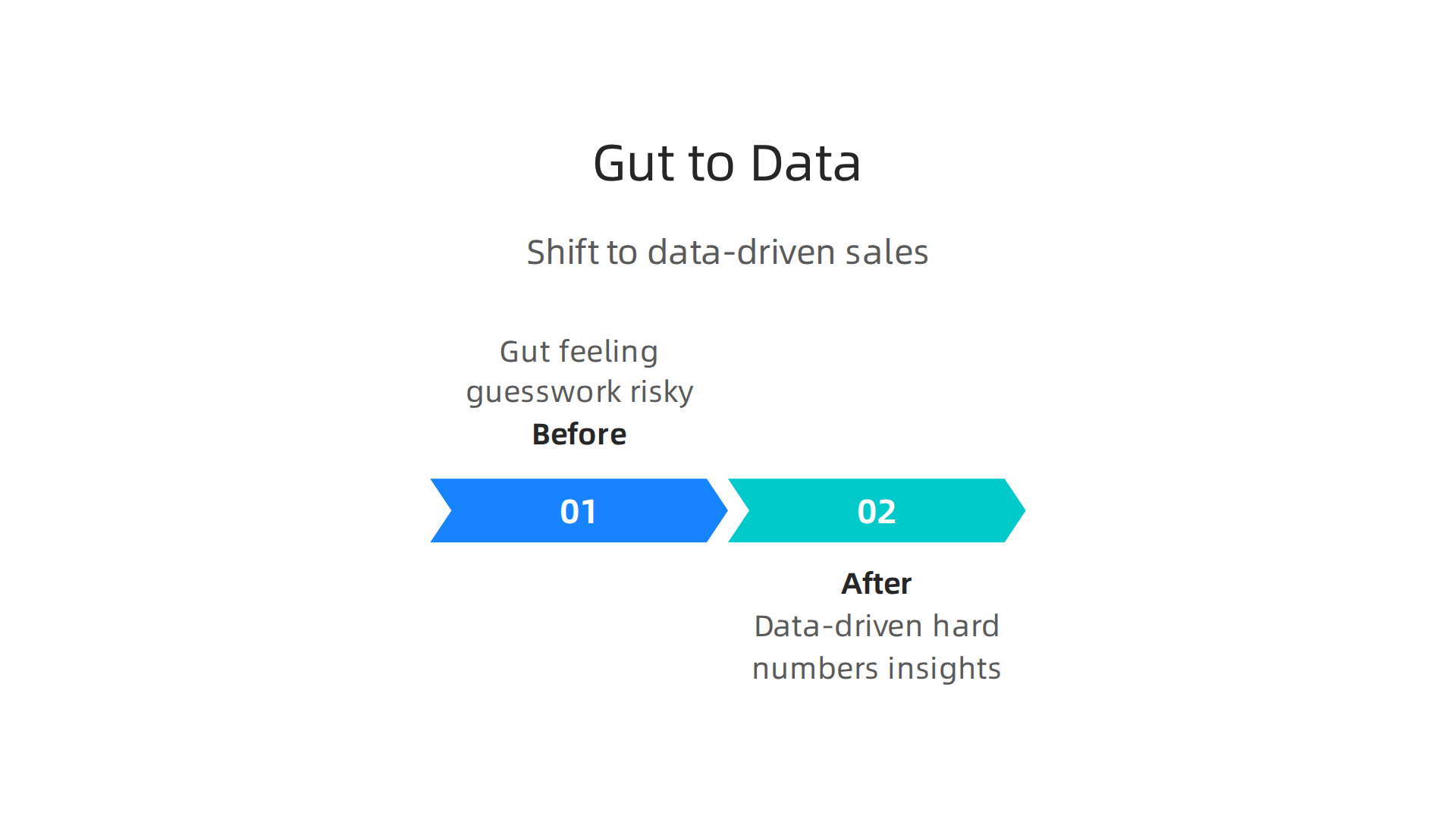
Customer satisfaction survey software gives you hard numbers. You get both quantitative and qualitative insights. For example, Searchlab reports that 65% of revenue comes from existing customers. That kind of retention is driven by understanding customer sentiment. Companies that track customer success metrics are better equipped to prioritize improvements. According to Gainsight, these metrics help deliver value and achieve outcomes. This data feeds into your omnichannel marketing strategy. It helps your b2b lead generation services target the right prospects. It also brings facebook ads transparency by showing what messages work. Ready to build a data-driven sales approach? Browse All Posts for more guides.
How Feedback Directly Impacts Revenue and Retention
When you listen to customers, good things happen. They feel valued. They stick around. And they spend more money.

Actually, the numbers back this up. Companies that improve retention by just 5% see profit jumps of 25 to 95%, according to Envive. That loyalty often starts with a simple survey. Customer satisfaction survey software helps you catch problems early. When you spot negative feedback fast, you can fix issues before a customer leaves. Searchlab notes that 65% of revenue comes from existing customers. Early fixes protect that revenue. Feedback also shows you what to improve. Maybe your sales process has a weak spot. Or your product needs a small tweak. Either way, the data tells you where to focus. That leads to smarter b2b lead generation services, stronger omnichannel marketing, and even more focused facebook ads transparency. Want to learn more ways to use feedback for growth? View Articles for practical how-tos.
Choosing the Right Customer Satisfaction Survey Software: Key Criteria
Now that you see how feedback protects revenue, the next step is picking the right tool. The customer satisfaction survey software market is growing fast. Experts predict it will jump from $4.43 billion to $8.5 billion by 2035, according to WiseGuyReports. But with so many options, how do you choose the best fit for your sales and marketing team? Here are the three criteria that matter most.
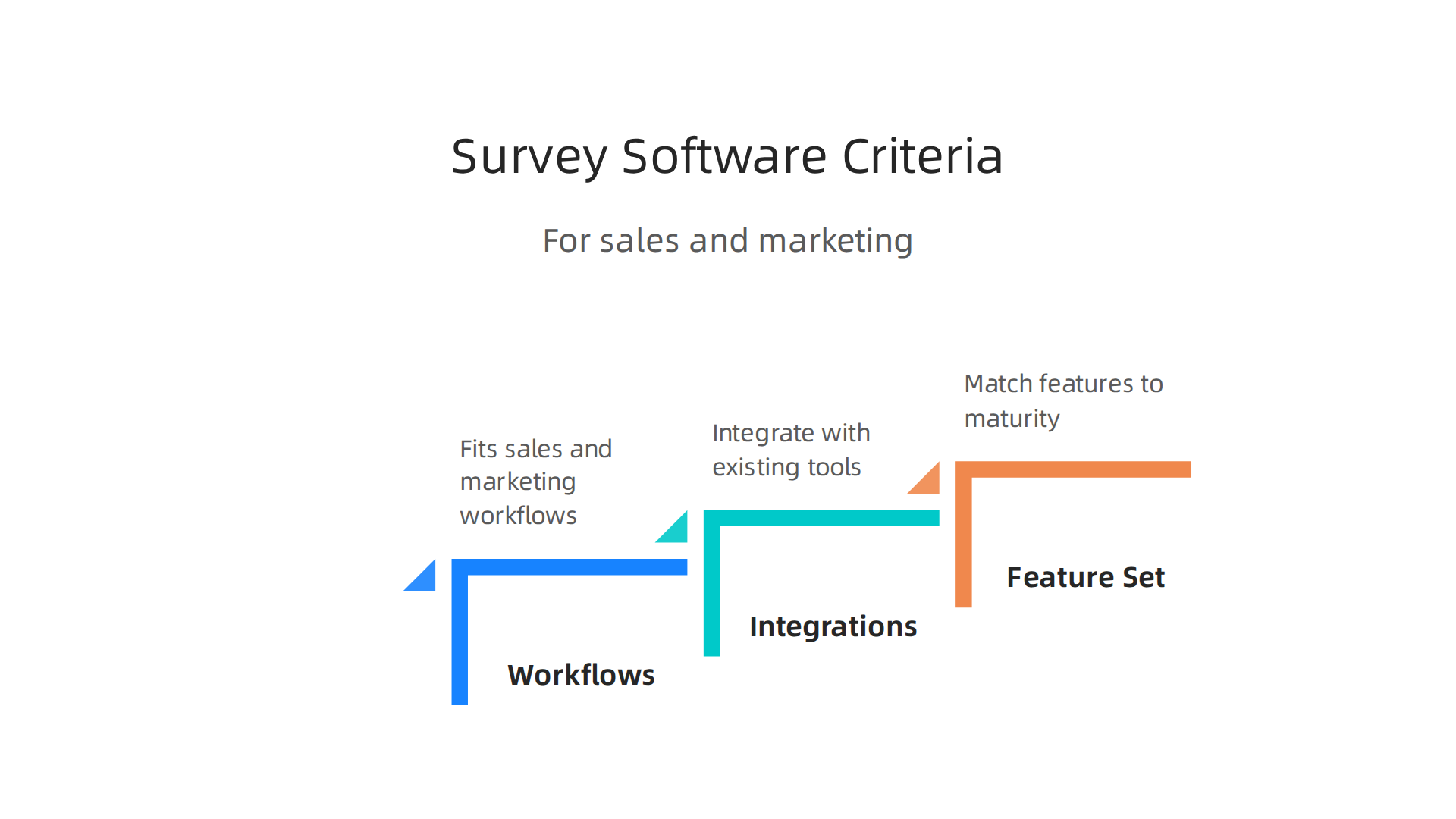
Not all tools are built for sales and marketing workflows. Some survey platforms focus on customer support or HR. You need one that helps you capture feedback during the sales process. Look for features like post-call surveys, lead qualification questions, and the ability to trigger surveys after a demo. Qualaroo lists tools that offer customizable templates and reporting tailored to sales teams.

A good fit saves your team time and gives you actionable data right away.
Integration with existing tools is a top priority. Your survey software should talk to your CRM, email platform, and lead generation tools. If it doesn’t connect easily, you will waste time on manual data entry. Integration helps you build a seamless omnichannel marketing strategy. You can connect survey responses to your b2b lead generation services and even use feedback to improve your facebook ads transparency by targeting audiences based on satisfaction levels. Jotform highlights Survicate as a go-to tool for businesses that need deep integration with their sales stack.
Your feature set must match your feedback maturity level. If you are just starting, you need simple templates and basic analytics. As you grow, you might want AI-powered text analysis, automation, and enterprise reporting. Zonka Feedback breaks down the best enterprise options based on analytics depth and AI capabilities. Start with what you can actually use. Do not buy a complex tool if you only need a simple NPS survey.
Ready to explore your options and learn more about building a feedback system that drives sales? Browse All Posts for practical guides and recommendations.
Must-Have Features for Sales and Marketing Teams
Not every survey tool fits sales and marketing needs. Focus on these three features.
Pre-built NPS, CSAT, and CES templates. They help you measure loyalty, satisfaction, and effort fast. Qualaroo highlights customizable templates designed for sales workflows.
Automated triggers based on customer actions. Send surveys after a demo or purchase to capture timely feedback. Jotform recommends Survicate for this kind of automation.
Advanced analytics and segmentation. Slice feedback by lead source or deal stage. This improves your omnichannel marketing and even your facebook ads transparency by targeting satisfied customers. Zonka Feedback notes AI-powered analytics for deeper insights.
Want to explore more? View Articles for additional guides.
Integration Capabilities with CRM and Automation Tools
We just covered the must-have features like templates and triggers. But here is the hard truth. Those features only work well when your survey software talks directly to your CRM. Without that link, you are stuck copying and pasting data by hand. That wastes time and invites errors.
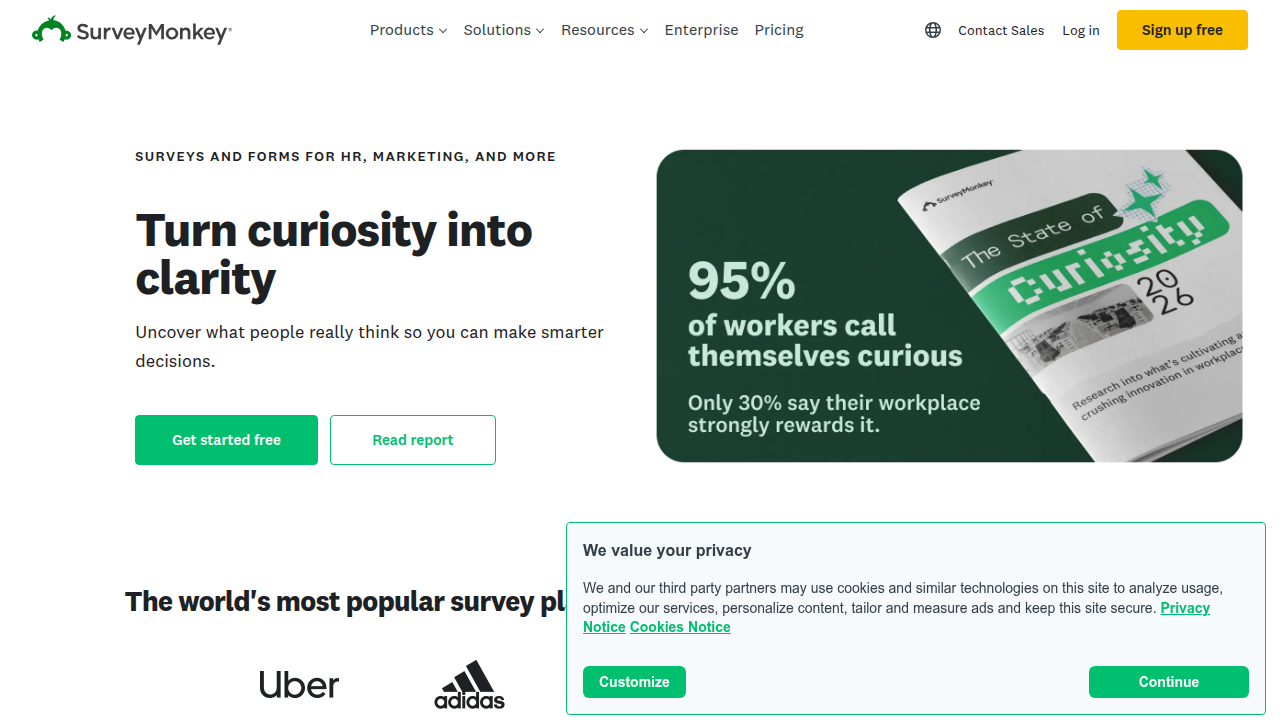
Seamless data flow between your survey tool and CRM is critical. When you integrate the two, feedback lands right in the customer record. You skip the manual work and get a complete view of each lead. Tools like SurveyMonkey offer a Salesforce integration that automates workflows and boosts retention.
That kind of connection also helps your omnichannel marketing stay accurate.
Automation also makes sure you collect feedback at the perfect moment. Instead of remembering to send a survey after a demo, your software does it for you. For example, you can trigger Delighted surveys based on Salesforce activity. That timing leads to higher response rates and better data.
Less manual work means fewer mistakes. A strong integration reduces data entry errors and frees your team to focus on closing deals. It also powers smarter use of customer satisfaction survey software across your sales cycle.
Want personalized advice on setting up integrations for your team? Contact Us to get tailored guidance.
Designing Surveys that Actually Get Responses
You have the perfect survey software. You set up your triggers and CRM integrations. But then you send your first survey… and hardly anyone responds.
That is a common pain point in 2026. Recent studies show that typical response rates now range from just 5% to 30%, and the numbers keep dropping. People are busy, distracted, and tired of long forms.

The fix starts with good design. Here is what actually works.
Keep it short and relevant
Short surveys win every time. Only ask questions that directly matter to your goal. If a question does not help you improve a customer experience or guide your B2B lead generation services, cut it. Most experts agree that shorter surveys get far more completions.
Pick the right channel and timing
Where you send your survey matters as much as what you ask. Sending through the wrong channel guarantees low responses. Think about your customer’s habits. Email works for some audiences. SMS works better for others. A strong omnichannel marketing approach lets you meet customers where they already are.
Timing also plays a huge role. Asking for feedback right after a positive interaction leads to better data. Sending the same survey weeks later often gets ignored.
Personalize the experience
A generic survey feels like spam. Use the data you already have to personalize the intro, the questions, and even the timing. This approach builds trust and raises completion rates.
Want to refine your survey strategy for better results? Contact Us for personalized guidance on your customer satisfaction survey software setup.
Best Practices for Question Design (NPS, CSAT, CES)
Once people actually open your survey, the questions themselves decide if you get useful data. That is where standardized metrics like NPS, CSAT, and CES shine. They let you benchmark your results against industry standards. For example, a good Net Promoter Score in 2026 falls between 30 and 50 for most industries, according to updated benchmarks. Using these proven scales makes your data easy to compare and act on.
But numbers only tell part of the story. Always include one or two open-ended questions. They give you rich qualitative data that explains the why behind the score.
Also, watch out for common traps. Never ask leading questions like "How great was our service?" And avoid double-barreled questions that ask two things at once, like "Was our team friendly and fast?" Keep each question simple and focused.
Want to learn more about designing surveys that work? Browse All Posts for more tips on customer satisfaction survey software and effective feedback strategies.
Timing and Channel Selection for Maximum Engagement
You wrote great questions, but when you send your survey matters just as much. Asking for feedback at the right moment dramatically impacts response rates and data accuracy. That is why post-interaction surveys work best. Send them right after a customer service call, a purchase, or a demo. The experience is fresh in their mind, so their answers are more accurate.
Now, where do you send the survey? Email is still the top channel for B2B surveys. But in 2026, SMS and in-app messages are growing fast. This is where a good omnichannel marketing approach helps. You want to reach people where they are most active. Just be careful not to over-survey the same contacts. Doing so leads to survey fatigue and lower response rates.
Want to explore more tips for using customer satisfaction survey software effectively? Browse All Posts for practical advice.
Turning Survey Data into Actionable Sales and Marketing Insights
So you ran your survey and collected all that feedback. Great job. But here is the truth: data without action is just noise. It does not help anyone if it sits in a spreadsheet. You need to turn those responses into real changes that improve your sales and marketing.
Start by segmenting your feedback. Group responses by customer type, product line, or region. When you look at patterns across segments, you see what really matters.

Maybe your B2B clients love your quick response time but want better onboarding. Or your newer customers feel confused by your pricing. These patterns tell you exactly where to focus your energy.
Next, close the loop. This means reaching back to customers who gave feedback and telling them what you changed because of their input. That simple act builds serious trust. It shows you value their opinion and are committed to improving. Plus, it turns a one time survey into an ongoing conversation.
Your customer satisfaction survey software should make it easy to tag, filter, and act on responses. When you connect survey insights to your sales process, you can refine your outreach, improve your messaging, and even spot opportunities for better lead generation. For example, if customers mention they found you through a specific channel, you can double down on that channel.
Whether you are fine tuning your sales approach or evaluating customer satisfaction survey software, the insights you gain can help you build better strategies. For more practical guides on growing your appointment setting career, Browse All Posts on our blog.
Closing the Loop: From Feedback to Improvement
Collecting feedback is only half the job. The other half is showing customers you actually listened.

In 2026, people expect follow-up after they share their thoughts. If you stay silent, you waste all that trust.
Closing the loop means reaching back to each person who responded. Do it with a personal message, not a generic email. Say thank you. Then share what you changed because of their input. That simple act reinforces how much you value them.
The right tools can handle the heavy lifting here. For example, you can trigger surveys based on Salesforce activity and sync feedback data across platforms using tools like Delighted. This makes it easier to follow up fast and stay organized.
Your customer satisfaction survey software should let you automate follow-ups and track responses. When you pair that with a thoughtful outreach plan, you turn feedback into a real driver of growth. For appointment setters, this matters a lot. It helps you refine your pitch and build stronger relationships with prospects. And for B2B lead generation services, showing you acted on feedback can open doors to deeper conversations.
Want more practical tips on growing your career? Browse All Posts on our blog for guides and strategies.
Segmenting Responses for Targeted Campaigns
Not all feedback carries the same weight. A happy customer and a frustrated one need very different follow-ups. That is why you must segment responses before you act.
Start by sorting people by customer type, stage in their journey, or survey score. For example, promoters who gave a high score are perfect candidates for referral asks. Detractors, on the other hand, need a recovery message that shows empathy and a clear plan to fix things.
A good customer satisfaction survey software lets you tag responses automatically. When you connect it to your CRM, you can send the right message at the right time without manual work. You can even automate survey distribution based on Salesforce data, so every contact gets a relevant touchpoint.
Segmentation also powers smarter omnichannel marketing. A promoter might respond well to a testimonial request on LinkedIn, while a detractor needs a personal email from your support team. The same logic applies to b2b lead generation services; you want to send the warmest leads to your sales team first.
Want more examples of how to turn feedback into real results? Browse All Posts on our blog for step-by-step guides.
Real-World Case Studies of Feedback-Driven Success
You have heard that feedback loops are powerful. But do you have real proof that they work? That is where case studies come in. In 2026, case studies are becoming the center of many marketing strategies because they turn customer voices into your best sales tool Prime Creative. Let us look at two examples.
Case Study 1: A SaaS company used a customer satisfaction survey software to tag promoters automatically. Those happy users received a referral request via email, while neutral users got a product tip series. Within three months, the company saw a 22% increase in referral conversions and a 15% drop in churn. The key? They connected survey data directly to their CRM and used segmentation to send the right message at the right time. This is a great example of how omnichannel marketing can work when it is driven by real feedback.
Case Study 2: A B2B service provider struggled with low lead quality. They added a short post-call survey to every sales conversation. The results showed that prospects who scored high on the survey were 3x more likely to book a second meeting. The sales team started using those scores to prioritize follow-ups, essentially creating a better b2b lead generation services funnel without extra ad spend. They also used facebook ads transparency rules to collect survey feedback from ad respondents, which gave them clearer signals on who was truly interested.
What do these stories tell you? First, the right software makes data usable. Second, the results build a strong business case for investing in a survey platform. Third, you can learn from both successes and mistakes without making them yourself. Want to read more case studies and practical how-tos? Browse All Posts for step-by-step guides that show you exactly how to turn feedback into growth.
Example 1: How a SaaS Company Increased Renewals by 20%
Picture this: a SaaS company sends out an NPS survey right after each key touchpoint. They use a reliable customer satisfaction survey software to collect responses instantly. When a customer gives a low score, the system flags them as a detractor. Then an automated workflow kicks in. The customer receives a personalized offer and a call from the support team within hours. This closed loop approach turns unhappy users into loyal ones. In fact, the company saw a 20% boost in renewals in just three months. This strategy aligns with key customer growth trends for 2026 ChurnZero. The lesson? Automated follow ups based on real feedback keep customers from slipping away. Want to build a feedback system like this for your role? Contact us to get personalized advice on using survey tools to grow your appointment setting career.
Example 2: B2B Sales Team Reduces Churn by 15% with CSAT Tracking
Here is another real example. A B2B sales team was watching too many customers leave. They decided to use customer satisfaction survey software right after every single call. This gave them honest feedback instantly.
They did not just collect the data. They studied the patterns. When scores were low in a specific area, they trained the reps on that exact skill. The training even covered how to communicate changes with clarity, matching the high standards of facebook ads transparency. This feedback loop strengthened their whole outreach and helped them improve their b2b lead generation services. It also made their omnichannel marketing more effective because they knew what customers actually valued.
Within six months, churn dropped by 15%. This kind of real customer evidence is a powerful growth tool in 2026 Custify. The lesson is simple: ask for feedback, then take action on what you learn.
Want more practical strategies like this one? Browse All Posts for actionable guides tailored to your career goals.
Common Pitfalls in Customer Feedback Programs and How to Avoid Them
Even the best intentions can lead to a failed feedback program. You might set up a survey, send it to your customers, and hope for the best. But without a smart plan, you will waste time and miss out on real growth. The good news is that recognizing these pitfalls early saves you a lot of headache. And prevention is always easier than trying to fix things later.
One of the biggest mistakes is collecting feedback but never acting on it. Customers notice when you ignore their input. That is a fast way to lose trust. In fact, according to Qualtrics, understanding your score is just the starting point. The real value comes when you follow through on what you learn. Learn more about NPS best practices.
Another common pitfall is not knowing what a good score actually means. A Net Promoter Score of 50 might look great on paper. But if your industry average is 70, you still have room to grow. Lorikeet’s 2026 benchmarks show that scores between 30 and 50 are average for most industries. Scores above 50 are considered excellent. Do not celebrate a number until you compare it to your industry.
A third problem is survey fatigue. If you ask for feedback after every single interaction, your customers will stop responding. Be strategic. Use your customer satisfaction survey software to send surveys only at key moments, like after a support call or a purchase. Quality over quantity matters more than you think.
The solution is simple. Set clear goals. Benchmark your results against industry data. And always close the loop with your customers. Tell them what you learned and how you plan to improve. That builds loyalty over time.
Want more practical advice like this? Browse All Posts for guides that help you grow your skills and land your next role.
Survey Fatigue and Low Response Rates
Here is another common trap. You ask for feedback too often and your customers stop caring.
Survey fatigue is real. When you send a survey after every purchase, every support call, and every website visit, people start ignoring them. They feel like you are asking for too much without giving anything back. The result? Low response rates and useless data.
How do you fix this? Be smarter about your timing and your tools. Use your customer satisfaction survey software to send surveys only at key moments. Pick one or two important touchpoints, not every single one.
Also, keep your surveys short. Nobody wants to answer 20 questions after a quick chat with support. Ask only what matters most. A good rule is three questions or less.
And here is the thing. Low response rates hurt your data quality. You need enough voices to make real decisions. So if you notice your numbers dropping, change your approach fast. Try a different channel or offer a small incentive.
Want to learn more about building a complete survey strategy? Browse All Posts for more guides and practical tips.
Ignoring Negative Feedback and Lack of Action
Here is another big mistake. You get negative feedback and then do nothing with it.
Negative feedback is actually a goldmine. It shows you exactly what needs to improve. But when you ignore it, you tell customers their opinion does not matter. That erodes trust fast.
Here is the impact. In 2026, a good NPS score for most industries falls between 30 and 50 (scores above 50 are excellent, according to Lorikeet). Brands that ignore criticism tend to stay stuck below that range. They miss their chance to turn detractors into promoters.
The fix is simple. Create a real process to act on criticism. Use your customer satisfaction survey software to track complaints, assign follow-ups, and close the loop. Even small changes show customers you listen.
Want to explore more feedback strategies? Browse All Posts for practical guides.
Summary
This article explains why customer feedback is essential for modern sales and marketing, especially for appointment setters and B2B lead generation teams. It shows how structured feedback—captured with customer satisfaction survey software—replaces unreliable gut feelings, improves retention, and drives revenue by revealing where prospects are engaged or lost. You’ll learn the three core criteria for choosing survey software (sales fit, integrations, and appropriate feature depth), which features matter most (NPS/CSAT templates, triggers, analytics), and how to integrate surveys with CRMs and automation. The guide also covers practical survey design: keep surveys short, pick the right channel and timing, and personalize outreach to boost response rates. Finally, it explains how to turn responses into action through segmentation, closing the loop, and case-study examples, while warning about common mistakes like survey fatigue and ignoring negative feedback.